What Is Stick Drift? Causes, a 30-Second Test, and the Fix Ladder
Stick drift is when an analog stick reports input while nothing is pressing it, so the resting position reads a non-zero value instead of (0.00, 0.00).
Stick drift is an analog stick sending input while untouched. What causes it, a 30-second browser test, and the fix ladder from recalibration to a Hall-effect swap.

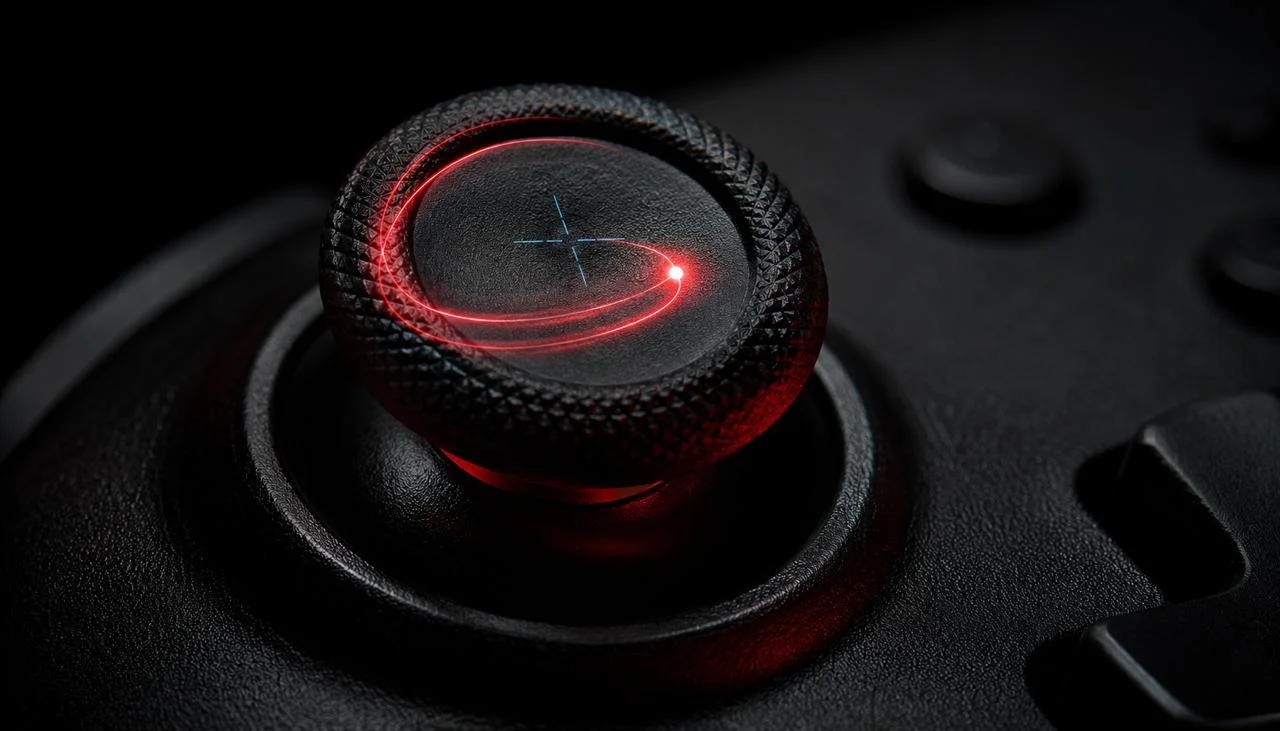
Stick drift (also called joystick drift or controller drift) is when an analog stick sends movement to the game while nobody is touching it: the camera pans on its own, the character walks forward after you let go, the aim creeps toward a corner of the screen. It is the most common controller failure on PlayStation, Xbox, Switch and third-party pads, and the cause is almost always the same. The potentiometer under the stick wears, so its resting value moves away from zero and the game reads that offset as a push.
This guide explains what stick drift is, how to confirm it in 30 seconds in a browser, and what to do next based on the severity you measure.
Drift in five lines
- Stick drift is an analog stick reporting non-zero input while your thumb is off it.
- The 30-second JoyCheck test confirms it in your browser, with no disassembly or installed software.
- A resting stick should read near zero; the warn and fail lines differ by controller family and are listed below.
- Cleaning or recalibration can clear dirt or very early drift; a worn potentiometer needs a new stick module.
- Hall-effect sticks (8BitDo Ultimate, GuliKit KingKong) have no friction-wear path, so they do not drift this way.
The W3C Gamepad API exposes analog-stick values as normalized floats from -1.0 to +1.0 [1]. JoyCheck warns on a stick whose at-rest reading passes 0.05 on a Joy-Con, 0.08 on a DualSense or DualShock 4, and 0.10 on an Xbox pad, and it fails them at 0.15, 0.22 and 0.25. These are our own working thresholds, set from the idle noise each stick module produces rather than from any manufacturer specification, and drift is only called when at least 80 percent of a rolling window of 60 to 90 readings stays past the warn threshold. To read where your own stick sits against those bands, use the deadzone tester.
Source: W3C Gamepad API specification
Confirm it in 30 seconds
- Open JoyCheck or any browser-based gamepad tester.
- Plug in over USB, or pair over Bluetooth, then press any button.
- Set the controller flat on a table, hands off the sticks.
- Watch the analog stick X and Y values. At rest they should read near zero.
- If the dot moves while you are not touching the stick, your controller has drift.
What is stick drift?
Stick drift is when an analog stick reports input while nothing is pressing it, so the resting position reads a non-zero value instead of (0.00, 0.00). In a game, it shows up as the camera slowly panning, your character walking forward on their own, or your aim creeping toward a corner of the screen.
Stick drift is not a game-side sensitivity setting; turning sensitivity down hides smaller drift values but does not fix them. It is also not a calibration error in the long run, because recalibration can mask very early drift but cannot rebuild a worn graphite track.
Drift specifically affects the analog stick’s at-rest reading. Buttons, triggers, and rumble motors are usually still healthy when a stick starts drifting. Drift is a stick problem, not a controller-wide one.
What causes stick drift?
Most stick drift comes from wear inside the potentiometer, the part under the stick that turns its position into a number. Dirt is the second cause: dust, skin oil and tiny debris that settle on the sensor track. Wear is permanent. Dirt can sometimes be cleaned out, which is why cleaning fixes some controllers and not others.
According to iFixit’s public Joy-Con teardowns [2], the potentiometer uses a graphite-and-carbon track that a metal wiper slides across. After hundreds of hours of use, the track wears thin in the most-used regions, and the wiper either loses contact or settles at a non-rest resistance. The game reads that offset as a push.
Controller makers describe the same causes. Nacon names mechanical wear, dust buildup and oxidation inside the joystick module as the main causes [5]. Turtle Beach adds that dust, skin oils and micro-debris work their way under the thumbstick and settle on the sensor tracks [6]. A weak centering spring can also stop the stick returning to true center, which looks like drift in the same test.
You can tell the causes apart with a test before and after cleaning. If the resting value drops back to normal after cleaning, it was dirt. If it stays high, or comes back within days, the track is worn and the stick module needs replacing.
How do you know if your controller has stick drift?
You know your controller has stick drift when a 30-second browser test shows your stick reporting a non-zero value while you are not touching it. Run the stick drift test, let both sticks rest at centre, and watch the live readings. A healthy stick rests close to 0.00; a drifting stick holds a steady offset past the warn line for its controller.
The 30-second test is the fastest deterministic diagnostic because it uses the browser-native Gamepad API to read the same raw values the controller sends to your console or PC. There is no install and no driver. The controller talks to your browser, the browser shows the numbers, and you decide.
Because the warn and fail thresholds differ by hardware, the device editions apply the right pair for you: PS5, PS4, Xbox and Joy-Con.
Run the test on the controller you have been struggling with, on the surface and orientation you normally hold it, and let it sit for the full 30 seconds.
That 30 seconds is the whole test.
A second deterministic signal is the circular drift orbit. When a worn potentiometer has degraded on one axis but not the other, the stick’s at-rest reading traces a slow circular pattern instead of sitting at a single offset. JoyCheck visualises this as a red orbit trail under the stick reading, and an orbit means the wear is uneven across the X and Y tracks, so recalibration alone is unlikely to help.
Which controllers drift most often?
Any controller with potentiometer sticks can drift, and that covers every first-party pad from Sony, Microsoft and Nintendo. No maker publishes drift rates, so an honest ranking is not possible. The best-documented case is the Nintendo Joy-Con. Hall-effect pads from 8BitDo and GuliKit avoid the wear path entirely.
| Controller | Drift pattern | What to do |
|---|---|---|
| Sony PS5 DualSense | Potentiometer sticks; the DualSense Edge uses them too, but in modules you can swap yourself | DualSense calibration walkthrough |
| Microsoft Xbox Series X/S | Potentiometer sticks on standard and Elite pads; the Accessories app tunes dead zones before any hardware fix | Xbox calibration guide |
| Nintendo Switch Pro / Joy-Con | Joy-Con drift is the most widely reported case; check Nintendo Support for repair options | Joy-Con drift test |
| 8BitDo and GuliKit (third-party) | Rarely drift; factory Hall-effect sticks remove the wear path at the source | Prefer Hall-effect on your next pad |
The Joy-Con story is the best-documented public case. Joy-Con drift has been the subject of class-action lawsuits in the United States [3].
Like other potentiometer sticks, the Joy-Con stick wears with use, and that wear is what the drift reports describe.
The DualSense pattern is less publicly documented, but the mechanism is the same: a potentiometer stick wears with use. The DualSense Edge uses the same potentiometer sensing, so it wears the same way. What the Edge adds is a stick module you can swap yourself in seconds, instead of soldering.
Third-party Hall-effect sticks from 8BitDo and GuliKit do not show the same wear pattern, because they use Hall-effect sensors instead of potentiometers [4]. Hall sensors measure magnetic flux from a tiny magnet attached to the stick, so there is no friction-wear path between the stick and the sensor.
Can stick drift be fixed, and what does it cost?
Yes, in most cases. Dirt and very early drift can clear for free or for about $10 with recalibration or cleaning. A worn stick needs a new stick module, about $15 to $30 plus soldering, or a new controller at $70 and up.
Work up that ladder and stop at the first step that brings the resting value back under your controller’s warn line on a fresh JoyCheck test. Each option treats a different failure mode, so the order matters. For the platform-by-platform walkthrough of each fix, on PS4, PS5, Xbox, Switch, and PC, see the stick drift fix guide.
| Option | Cost | Reliability | When it works |
|---|---|---|---|
| Recalibrate | Free | Sometimes | Very-early drift, before the track wears through |
| Compressed air and isopropyl alcohol | About $10 | Sometimes | Contamination that mimics drift; worth trying before disassembly |
| Swap the stick module | $15 to $30 | Reliable, needs soldering | A worn potentiometer; iFixit guides cover most controllers |
| Replace the controller | $70 and up | Simplest | When repair cost approaches a new pad; prefer factory Hall-effect sticks |
Recalibrate first where your platform allows it. Windows has a game controller calibration tool; PlayStation consoles have no stick recalibration menu. Recalibration remaps the current at-rest reading as the new zero, which works for very early drift where the track has shifted slightly but is not yet worn through. Run the JoyCheck test again afterward: if the at-rest reading is now back under the warn line, recalibration worked; if not, move on.
“Recalibration alone is only the right answer when the sensor is not yet worn. A controller that still tests past its warn line after recalibration needs a hardware-side fix, not a firmware-side remap. Treat recalibration as a 60-second sanity check, not a real fix.”
Taimoor Bamazai, founder, Elites Algorithm
Try isopropyl alcohol next. A small amount of 99% isopropyl alcohol on a cotton swab, applied around the stick base, can dislodge graphite-and-dust contamination that mimics drift. It is worth trying before disassembly because it occasionally resolves what looks like moderate drift but is really a contamination issue.
Swap the stick module if cleaning does not help. Replacement stick modules cost roughly $15 to $30 in 2026 and require soldering for most controllers. iFixit publishes step-by-step disassembly guides for Joy-Con, DualSense, and Xbox controllers.
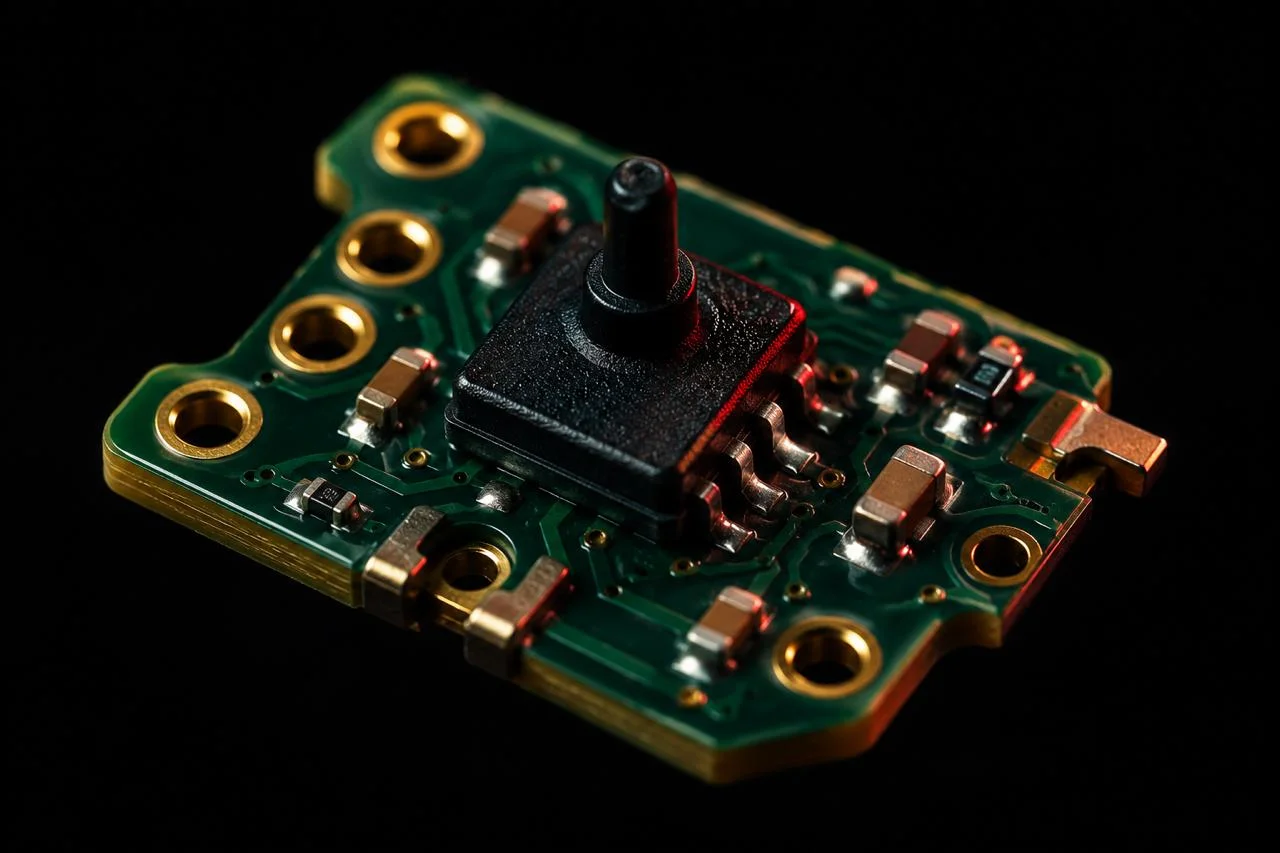
Upgrade to a Hall-effect controller as the long-term fix. If you have replaced sticks more than once, an 8BitDo Ultimate or a GuliKit KingKong costs roughly the same as a single first-party replacement. The historical trade-off was cost, and that gap has narrowed enough that Hall-effect is now a practical drop-in upgrade.
Why does the 30-second test work?
The 30-second test works because every modern browser implements the W3C Gamepad API, which exposes the same normalized analog-stick values your console or PC would receive. The browser reads the controller many times a second, JoyCheck reads every one of those frames, and the result is the same raw input data your game sees.
This makes the browser test deterministic. It does not depend on game settings, console firmware, OS-level deadzones, or any vendor-specific calibration layer. The number JoyCheck shows is the number the controller is physically reporting.
The 30-second window matters because controller drift can be intermittent. A brief spike is normal noise. JoyCheck only calls drift when at least 80 percent of a rolling window of readings stays past the warn line, so one twitch never counts. A reading that hovers right at the line needs a second test on a different surface to rule out a tilted table.
Why do Hall-effect sticks not drift?
Hall-effect sticks do not drift because they measure magnetic flux from a small magnet on the stick, not friction-wear between a resistive track and a metal wiper. The Hall sensor has no physical contact with the moving stick; it reads through air. With no friction surface to wear, there is no track for a wiper to degrade.
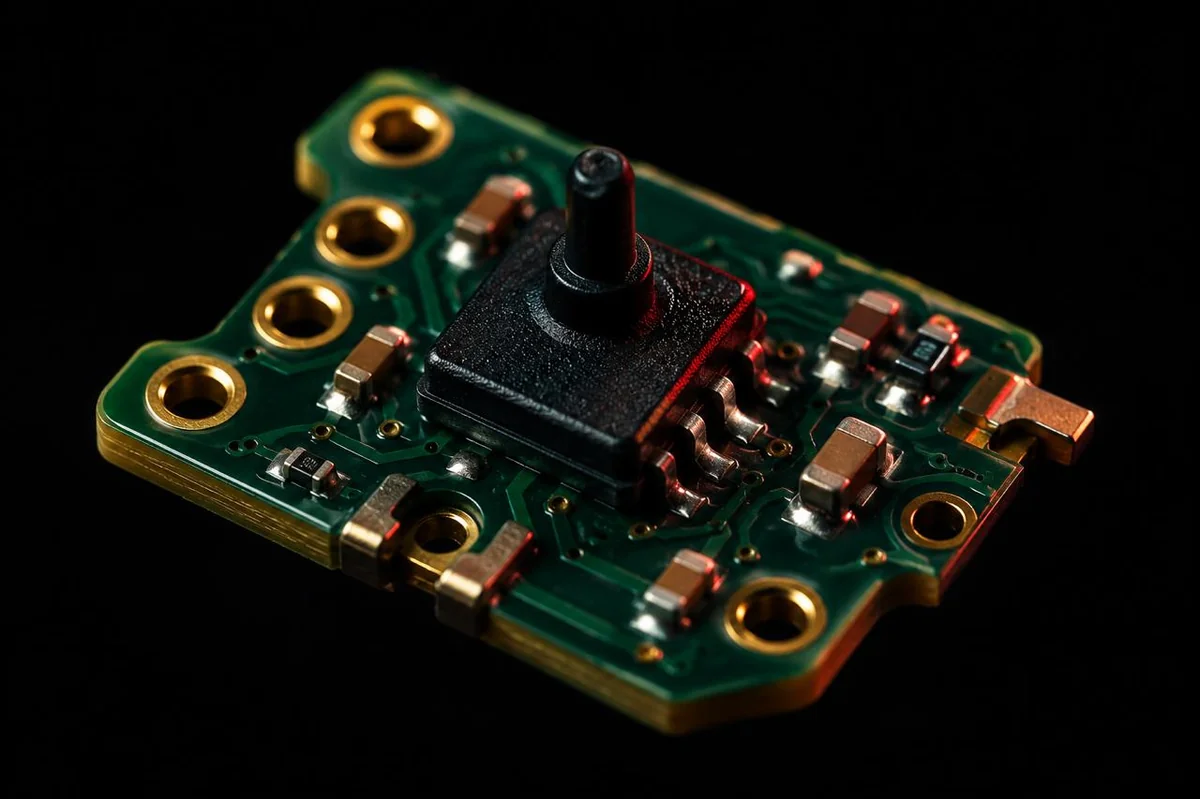
Allegro Microsystems’ Hall-effect sensor documentation [4] describes the same contact-free measurement: the sensor reads a magnetic field, so no part rubs against it. The trade-off has historically been cost, because Hall sensors and the magnets they read are slightly more expensive to manufacture per module. That gap has narrowed enough that 8BitDo and GuliKit now ship Hall-effect sticks as standard on several pads. Sony, Microsoft and Nintendo still fit potentiometer sticks to their own controllers, the DualSense Edge included.
When does upgrading to Hall-effect make sense?
Upgrading to Hall-effect makes sense when you have already replaced one stick, or are about to buy a second first-party controller as a replacement. The price gap has shrunk to roughly the cost of one first-party controller in 2026, and the wear-cycle is eliminated rather than restarted, so a one-time upgrade pays back across the next two replacement intervals.
The practical advantages are zero drift across the controller’s useful lifetime, slightly better precision in low-deflection movements, and resistance to the dust-contamination drift pattern that potentiometer sticks show. The one disadvantage is upfront cost, which has already shrunk to roughly the price of a single first-party controller.
Can you prevent stick drift?
You cannot stop a potentiometer from wearing, because the wear comes from normal use. You can slow the dirt side. Play with clean, dry hands, store the controller covered or in a drawer, and wipe around the stick base now and then. Nacon also advises avoiding excessive force on the sticks [5].
The only real prevention is a stick that has no contact track to wear. If drift has already cost you one controller, buy the next one with Hall-effect or TMR sticks.
When should you re-test after fixing drift?
Re-test after every fix, and aim for two clean passes in a row before considering the controller fixed. Drift can be intermittent during the first minutes after a recalibration or hardware swap. Schedule three tests: immediately after the fix, again after 10 minutes of normal use, and a third after a full play session.
If all three readings rest under the warn line with no orbit pattern, the fix held. If any of the three returns to non-zero readings, the underlying mechanical issue is still present, so move to the next option on the cost ladder above.
A longer-term re-test cadence is also worth running every two to three months on controllers that have been fixed, because potentiometer wear is progressive. A fix can hold for months and then return, so three clean tests across three months catch a recurrence before it ruins a match.
What other diagnostics should I try if JoyCheck shows clean?
If JoyCheck shows your stick resting under its warn line but your game still shows drift-like behaviour, the issue is software-side. Check the game’s deadzone setting first, then update the controller firmware through the manufacturer’s official utility, then test the same controller in a different game to rule out per-title input bugs.
A single browser test that comes back clean across three separate sessions is strong evidence the hardware is not the cause. The drift symptom is then somewhere in the game, the OS-level deadzone, or a contested input source like an overlay app or a wireless dongle on the same band.
What do JoyCheck’s drift bands mean?
Analog-stick at-rest drift sorts into four rough bands, and the band a controller falls into maps to the action a player should take, not just a “good or bad” verdict.
| Band | At-rest reading | What it means | Action |
|---|---|---|---|
| Healthy | Under 0.05 | Within normal sensor noise | None |
| Early | 0.05 to 0.10 | Light contact-track wear; small offset reading | Recalibrate or adjust the dead zone |
| Moderate | 0.10 to 0.20 | Visible drift in slow-precision games; recalibration insufficient | Increase the dead zone or plan a module swap |
| Severe | Over 0.20 | Mechanically worn past software compensation | Replace the stick module (Hall-effect or TMR) |
These bands are our own working heuristic for reading at-rest values from the W3C Gamepad API, not a manufacturer specification. The tester itself uses the per-controller warn and fail lines listed above and on each device page. Last updated on 2026-10-17.
Where these drift figures come from
- W3C Gamepad API specification. The W3C standard defining normalized analog-stick value ranges (-1.0 to +1.0) and the polling interface every modern browser implements for connected gamepads.
- iFixit Joy-Con repair guides. Step-by-step teardowns of the Joy-Con analog stick module, documenting the potentiometer assembly and its graphite-track wear pattern.
- Joy-Con drift on Wikipedia. Coverage of Joy-Con drift reports and the US class-action lawsuits.
- Allegro Microsystems Hall-effect sensor publications. Public datasheets describing the magnetic-flux measurement mechanism that lets Hall-effect sensors operate without friction-wear, and the comparative lifespan against potentiometer-based sticks.
- Nacon: What is stick drift. Names mechanical wear, dust buildup and oxidation inside the joystick module as the main causes, and advises regular cleaning and avoiding excessive force.
- Turtle Beach: Why stick drift happens. Describes potentiometer wear as the main cause, and dust, skin oils and micro-debris settling on the sensor tracks as a second cause.
Is stick drift covered under warranty?
It depends on the manufacturer and on where you live, and the terms change, so check your own regional support site rather than a summary. Nintendo has handled Joy-Con drift repairs outside normal warranty terms in several regions. Sony, Microsoft and third-party makers generally treat drift as wear, covered while the standard warranty runs. A measured at-rest value from a browser test is the evidence any of them will ask for.
Does recalibrating my controller every week prevent drift?
No. Recalibration adjusts the firmware's interpretation of the current at-rest position. It cannot rebuild a worn graphite track. Recalibration as a preventative measure may delay the day drift becomes visible by a small amount, but it does not slow the underlying mechanical wear inside the stick module.
Why doesn't compressed air alone fix drift?
Compressed air can dislodge surface dust around the stick base, which sometimes reduces drift symptoms caused by contamination. It cannot reach the potentiometer's internal graphite track. If compressed air alone resolves your drift, the cause was contamination, not wear, and the fix may not last past the next play session.
Can I tell stick drift apart from a software bug?
Yes, with a browser-side test. A software bug or OS-level deadzone setting will not show up in JoyCheck's raw Gamepad API readings, because the browser test reads the controller's hardware input directly. If JoyCheck shows a non-zero at-rest reading, the hardware is the source. If JoyCheck shows the stick resting under its warn line but your game still drifts, the issue is software.
How long does a Hall-effect controller last before drifting?
Hall-effect sensors do not have a friction-wear mechanism, so the sensor itself does not drift across the controller's normal lifespan. Other components (rubber dome under the stick, plastic stick housing, internal flex cables) can fail over time, but the drift symptom specifically caused by potentiometer wear does not occur on Hall-effect sticks.
Is third-party software needed to diagnose drift?
No. The Gamepad API is built into Chrome, Edge, Firefox, and Safari. JoyCheck uses only the browser-native API. There is no install, driver, or executable. The diagnostic is entirely client-side, and the controller's input never leaves your machine.
What if my controller fails the test on one stick but not the other?
Two-stick controllers have two independent stick modules, and they wear independently based on use. It is normal for one stick to drift while the other tests clean. Often the left stick wears first, because most games use it for movement and it moves more. You can replace just the affected module on most controllers.
Measure your stick's at-rest value
Healthy is under 0.05. Above 0.20 the module is worn out.